Tricky Questions Reign in Behavioural Interviews

Tricky Questions Reign in Behavioural Interviews Adapted from Arlene Hirsch From the NATIONAL BUSINESS EMPLOYMENT WEEKLY From the publishers of the Wall Street Journal: Dow Jones & Company Inc. Most interviewers routinely include several behavioral questions along with more standard general questions. Their goal is to make sure they don’t hire a candidate who can talk a good game but can’t deliver a great performance. Built on the belief that past performance is the best predictor of future success, this interviewing style relies more on specifics. Questions usually begin with such phrases as “Tell me about a time when…” or “Give me an example of…” Interviewers who favour this format usually develop their line of questioning around the traits and skills deemed important for success in the position or organisation. For example, if a job involves a lot of client interaction, an interviewer might ask you, “Tell me about a time when you had to handle an irate client.” For a position that requires extensive teamwork, you might be asked to “Give an example of a situation where you demonstrated your skill as a team player.” Preparation Knowing how interviewers structure their questions makes it easier for you to prepare good responses. If an interviewer prepares by reviewing the job description to determine a job’s required skills and traits and asks for specific examples that demonstrate those characteristics, you need to go through a similar preparation process. Job descriptions for a specific position or function can help you prepare for behavioural interviews. If an employer wants someone who’s a “team player,” you can expect to be asked some of the following: “Tell me about a time when you had to rely on a team to get things done.” “Provide an example of a time when you had to persuade people to do something that they didn’t want to do.” “Give me an example of your leadership style.” Candidates who understand the technique and are prepared to handle these types of interview questions have an edge over those who are unaware of this technique. Start With Your Resume An easy way to start preparing for behavioral questions involves resume review. By going through your resume line-by-line (in search of relevant examples), you’ll become comfortable with how you plan to answer likely questions. The less confident you feel about a specific circumstance or qualification, the more you need to prepare and rehearse your response. “The idea behind behavioral interviewing is that you can tell much more about a person’s attitudes, work habits and skills by hearing them describe real actions taken in real circumstances than by letting them speak in the abstract about themselves,” says Allen Salikof, president of a US-based search firm. Expect interviewers to ask negatively phrased questions that reveal your weaknesses and flaws as well as your strengths. Don’t fall into the trap of demeaning yourself just because you’re anxious to comply. If the stories you tell don’t reflect positively on you, there’s no reason to tell them. A Three-Step Approach Some candidates find the format of behavioural questions unsettling. In the pressure of the moment, they can’t think of a single example. To overcome that obstacle, develop a list of experiences that cover the skills and characteristics required for the position you seek. Try the following three-step approach: 1. Determine your chief skills or strengths and actual experiences which exemplify each one. Remember dates, names, achievements and other details that will convey the situation to the interviewer. 2. Understand the job’s description and be prepared to recall specific actions and behaviours that address the required skills. 3. Don’t make vague proclamations of your skills. Small but telling actions and behaviours are more important than grandiose but unsubstantiated claims of job success. Structuring Your Stories It helps to use a P-A-R (Problem-Action-Result) formula to structure your stories. Review your resume and decide which stories to tell. Some candidates even write, edit and rehearse their stories. This is time-consuming but can be worth the effort. Since most people aren’t natural storytellers, it’s good to know what you plan to say and how you plan to say it. That way you minimise the risk of drawing a blank, telling the wrong story or rambling. Try not to sound wooden or rehearsed. To put a unique spin on the P-A-R format, try a R-A-P format. Start with the result, because accomplishments capture an interviewer’s attention. Then describe the actions you took and finally, the problem that was solved. In that way, your accomplishments stand out boldly. If you’re really savvy, you can vary your approach by using both strategies within the same interview. For example, if you’re describing a tough problem, you might want to use the P-A-R approach to emphasise the very real challenge you faced. If you achieved a particularly spectacular end result, you might want to use the R-A-P format, which emphasises your results. When You Don’t Know the Answer Behavioural-based interviewers can be like bulldogs. They won’t give up until they get the information they want. But you don’t have to answer a question just because it was asked. At times, you really won’t have the answer. Much as it may hurt to say, “I’m sorry but nothing comes to mind,” that may be the most honest answer. Rather than lie, you’re better off being honest about what you have and haven’t done. You also can ask for clarification. If you don’t understand what the employer is looking for, ask him or her to be more specific. Most employers will appreciate your interest and thoroughness. Although silences can be uncomfortable, they also can be productive. Rather than rush into an ill-advised statement, make sure that you’re in control of your response. If this takes more time, the interviewer will need to wait. Most interviewers will appreciate your thoughtfulness. Strategizing Behavioral Questions Behavioural questions pose a real challenge to interviewees who are striving to make the interview a conversation between equals rather than an interrogation. This isn’t
The Spirit of Collaboration
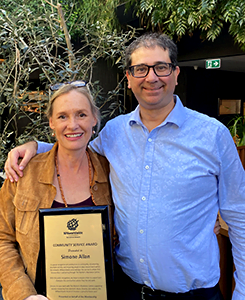
Many of you may know that Elias Recruitment works closely with other agencies to expand opportunities for our candidates and widen the talent pool for our clients. Part of this is through network called NPAworldwide. I have been lucky to be involved in the leadership and was recently the Chairman of the Board from March 2020 to March 2022. ANZ members had their first conference since Covid at the beautiful seaside resort of Manly on Sydney’s northern beaches. Guests came from across Australia and New Zealand as well as international speaker Mike “Batman” Cohen and NPAworldwide President Dave Nerz from the US. The conference was jam-packed with great content including topics on differentiating your brand, understanding the talent market and immigration, facilitating Diversity and Inclusion, latest legal issues affecting recruiters and some very handy tips on online sourcing. It was lovely to be able to socialise and catch up with old friends and welcome some new ones. We had two new members just join a few days before the conference. It was also a chance to reconnect with our sponsors and partners. The highlight for me was the NPA Spirit. Last year Simone Allan from Mondo Search who lives near Manly won the NPAworldwide’s Community Service Award for her work founding the Women’s Resilience Centre. We spontaneously decided to auction off prizes and sell clues at our Trivia night in support of this great cause. Thanks to the generosity of several sponsors and members, we raised $10,000 for the Women’s Resilience Centre in just a few hours. All due to the spirit of collaboration. Jason Elias CEO, Elias Recruitment
What I wish I’d known as a new lawyer | Advice from a recruiter

What makes the difference between a fresh graduate and a veteran lawyer often comes down to details – writing an email so a client clearly understands their legal options, or contributing effectively to a business meeting to win new work or consolidate an existing relationship. On 18 August 2017, The College of Law hosted a one-day event, the New Lawyers Summit, featuring advice from senior lawyers, recruiters, digital networkers and barristers to help law graduates acquire the skills they need to excel professionally. Insights spoke to recruiter Jason Elias, who was part of the New Lawyers Summit, on his advice for new lawyers hoping to impress in their first graduate role. “As recruiters, we hear, see and are sometimes purely surprised by some of the easily avoided but common mistakes we see in the recruitment process,” said Elias. Including a photo ranks high on his list of job-hunting faux pas. “There is no reason to put a photo in a legal CV, even if you look like Amal Clooney – or George Clooney. It’s irrelevant. Unlike actors or models, looks are irrelevant when it comes to being a good lawyer.” “Be brief in your CV,” advised Elias. “Anything over four pages is overkill. Make sure you focus on the most recent and relevant roles. Do not include any matters that could be discriminatory, such as references to your age, marital status, race or religion. “Don’t try to be fancy with your CV, with illustrations or boxes or any other kind of novelty. Just be professional. Remember, the CV is there to get you the interview. Once you’re in the interview, let your personality shine a bit more.” For law students looking to impress recruiters and law firm HR, Elias advised finding some form of legal work while studying law. “Get a job, even if it’s in the mailroom,” said Elias. “There are so many stories of managing partners who started in the mailroom. Get an associateship with a judge, find work as a paralegal – anything relevant to your chosen career.” Elias also noted that marks remain important, so a concerted effort to do well – and consistently – in the study of law will distinguish applicants at the graduate recruitment stage. Applying the same sense of industry and commitment to preparing for an interview as one might for a distinction or high distinction is essential – and one of the most overlooked areas for graduate applicants. “Preparation is really important. I’ve never understood why it’s overlooked. When you’re going for a job, your academic transcript might have three pages of marks, which a recruiter or an HR manager might glance over for twenty seconds. For each of those marks, you might have spent dozens of hours to make sure it was distinction, not a credit. Yet I still hear HR people telling me that a candidate didn’t know their firm specialised in a certain area. “To prepare well for an interview, read the firm’s website,” urged Elias. “Read anything that is written by the firm and its lawyers. Know the legal press. Know the LinkedIn profiles of all the partners. It shows you know the firm and want the job.” In recent years, automation and outsourcing have featured frequently in legal news, sparking some concern that it may disrupt entry level and paralegal work. In Elias’s view, these concerns are largely unfounded. “I’m a bit skeptical about how much automation will really effect the legal profession. There’s no substitute for quality control, and only real people can ensure quality work. Automation may make our work more efficient but it won’t replace all work. New lawyers should focus on doing what machines can never do – understanding the commercial context of a legal issue, and the subtleties of human nature. Much of the time advice is not just about technical black letter law but the commercial context and underlying human motivations around a deal.” Above all, Elias advises perseverance. “Getting turned down from a job interview is not the best feeling in the world,” Elias said. “Some roles, especially in-house, can have up to 100 candidates. Some employers will share tips on how you can improve. Take these tips into consideration and learn from the job application experience. Remember, recruiters deal with thousands of lawyers each year. Nobody is intentionally out of work for long.” This article was first published on 12 July 2017 in the College of Law.
REFLECTIONS ON 2021

There is an old Chinese saying “Better to be a dog in times of tranquility than a human in times of chaos”. I am not sure if I subscribe to this as 2021 was indeed a year of chaos but at the same time, there were many positives. We started Elias Recruitment in May 2000 and have seen many economic cycles, up and down. Often when business confidence is up the transactional lawyers are going gangbusters and then when recessions hit the family lawyers, litigators and insolvency folks get busy. However in 2021 everyone was busy. Lawyers seemed to have more work than pre-covid despite the best efforts of a global pandemic and often kneejerk reactions from politicians sending us into extended lockdowns. The recruitment market has been the busiest we have seen it. Despite having expanded our team to 10, everyone is still flat chat. I attribute this in part to the lack of supply of decent experienced lawyers open to changing jobs and unprecedented demand for lawyers across firms, inhouse and government. At the same time, the quality and quantity of ad response from job boards like SEEK have dwindled and often risk-averse lawyers have been hesitant to change jobs in an unpredictable and volatile market. The Great Resignation often touted overseas is yet to be replicated here. I predict there may be more movement towards March 2022 depending on how the new Omicron strain plays out. In the meantime we have had great success with direct approaches to lawyers as well as using technology to map every lawyer in the state. Many candidates we work with are exclusively represented by Elias Recruitment. This means that we can partner effectively with them and make sure our clients have first access to the cream of the crop that cannot be found elsewhere. As we hurtle towards the end of the year, I wanted to thank all our clients and colleagues who have supported us this last year and beyond. We wish you and your colleagues all the best for the holiday season and a safe, rewarding and successful 2022. Jason Elias CEO Elias Recruitment
Getting Candidates to Say Yes during Covid

After 21 years of recruiting, one of the most frustrating discussions is having to tell a client that the candidate has knocked back their offer. You get to the end of the process after numerous interviews and meetings and discussions and then find out that you are back at square one. Now, in a competitive market, it is understandable that good candidates may have multiple opportunities but what is unforgivable is when the candidate knocks back the offer for reasons we can control, namely the recruitment process itself. Here are five easy ways to minimise the chance of clients rejecting you: Understand the market It is a candidate-short market. The borders are closed, there are few active candidates, risk-averse lawyers are reluctant to leave safe roles. The bargaining position that was with employers a few years back has switched. You need to appreciate that candidates are in demand and court them. While we know you think your firm is the best in town, unless you have the brand equity of Apple or Amazon, candidates may not have the same perception. Interviews We get that face to face interviews are preferable to video ones but, in most of Australia, virtual interviews are now the norm. There is no point using old-world pre-Covid thinking when scheduling interviews. There is no slinking away from the office during lunches, candidates are more in control of their time. If you like a candidate you have two choices, see them quickly and lock them in or delay unnecessarily and wait for other opportunities to compete with yours. Once a candidate is on the market they will rarely look at just one role. Just like clients rarely want to see only one candidate. If you need more than 1 interview (we suggest two minimum) then why not do it back to back. Meet with stakeholder 1 for 40 mins and if things go well, then bring in any other decision-makers. There is no rule that says interviews must be on different days. In this market, second interviews should take place no longer than 48 hours from the first. I know you are busy but if you don’t hire someone you will be even busier. What is the purpose of interviews? Pre-Covid interviews were mainly about assessing the skills, experience and attitude of the candidate. The interviewers also have another job and that is selling the benefits of the role to the candidate. Your competitors will be doing this so unless you want to try recruiting with one hand behind your back, you should follow suit. What is your firm’s Employee Value proposition? What benefits do you offer – phones, insurance, gym membership, additional leave and parking are now more common. The key will be flexibility and work from anywhere. Companies that impose a blanket return to the office full-time rule will struggle to attract candidates in a post-Covid marketplace. Tell the story of why your staff like working with you, how you looked after them during the pandemic, how their career will grow at your firm. Make them feel valued, not a robot that churns out billable hours. Gamesmanship / Gameswomanship There is nothing better than feeling like you got a good deal – particularly when it comes to buying a T-shirt in Bali. Bargaining on salaries, however, is fraught with danger. Make sure you offer a fair market salary to prospective candidates. Gain access to independent surveys based on real data (eg ALPMA’s salary survey) and work out what is fair. You should also consider what the candidate is currently earning and the psychology that people generally like to step up if they take the risk of a move. Recruitment is just the start As Rick says to Captain Renault at the end of Casablanca ” I think this is the beginning of a beautiful friendship”. Remember, recruitment is not a one-off transaction like buying a car. Your staff member will hopefully be with you for a long time and how you treat them during the recruitment process will set the tone for the working relationship going forward. if they feel valued and respected you will more likely get a dedicated, long term, profitable employee. Jason Elias Managing Director, Elias Recruitment
Uncertain times- don’t worry, we are in your corner

Sometimes you need to talk to someone about your career. It is dangerous to speak to colleagues at work so an objective outsider with industry experience is a good option. Here is where an experienced consultant can help. Elias Recruitment has over 20 years helping legal professionals in private practice and in-house legal roles. Our award winning team, are a safe pair of hands to advise on everything from salaries and your current role or any future move. We can offer expert advice and insight into which opportunities will best suit your career ambitions. We have consultants in Sydney, Melbourne, Brisbane and Perth to assist you. So if you want a friendly, objective voice on your team, book a free career chat with one of our team at [email protected].
How to position yourself for approaches – Headhunting…

A few touches to your mobile phone and your groceries, an Uber or a pizza come to you. So why not a job? Many of the best jobs are never advertised so how do you hear about them? Good employers know that the best lawyers are so busy running their practices that they don’t have time to trawl through job ads. They also like keeping strategic hires out of the public eye so the marketplace doesn’t catch on to what they’re doing and where they’re headed. That’s why, when it comes to bringing in the big guns, they’ll use third party headhunters to track down, sound out and snare the best talent for themselves. Headhunters don’t use a scattergun approach. Once they’ve been briefed, they usually put feelers out via networks, compile a longlist, then research those candidates to see who’s likely to be a good fit. By the time they approach someone, they pretty much know who they are, what they do and what their reputation is like. So, if you want to be in their sights, there are six things you should be doing. Social networks – make LinkedIn work for you Review your LinkedIn profile, make sure it clearly articulates your skills, experience and area of practice. Highlight projects you’ve worked on and the value you contributed (without of course breaching client confidentiality). Headhunters want to have a good understanding that you’ve worked on similar kinds of matters to those their client has briefed them about. Don’t be shy about blowing your own horn. See Getting your social media profiles ready (Above). Be known as an industry expert You’ll never be headhunted if no one has ever heard of you. So, if you’re not already building a profile for yourself, start now. Put yourself forward to present on your areas of expertise wherever possible, especially for industry events or CPD. As an example, check out Bulletpoints for content. Write about important issues and hot topics affecting your work and share these – not just via your firm’s newsletters but directly with contacts by publishing LinkedIn and other social media channels. To ramp things up, join LinkedIn groups of like-minded people such as Australian Legal Community and start contributing to the conversations. Consider publishing in industry journals – or better still, form relationships with journalists to expand opportunities of being quoted in business or mainstream press as an expert in your field. Releasing subtle signals If you are considering making a move, it’s a good idea to start putting your feelers out there. You can even change your LinkedIn settings to discreetly show that you are open to new opportunities (not viewable to your employer). Also check that your Inmail settings allow you to notify users that you are open to ‘career opportunities’. Make contacting you easy, not a mystery While gatekeeping receptionists can be great at shielding you from telemarketing calls, they can act as a block for headhunters who want to sound you out. So make yourself easy to contact by including your mobile number and personal email address on your LinkedIn profile. If a headhunter struggles to reach you, they may bypass you and run the opportunity by the next person on their list. And, if a headhunter calls and you can’t speak freely, set a time to chat when you’re out of the office. This also gives you a chance to check out their LinkedIn profile to see whether you want to deal with them. Remain professional, don’t breach etiquette Don’t tell anyone in your firm – and that means anyone – about your plans to move, even once you’ve been approached. If the headhunting process isn’t handled discreetly, you’re likely to jeopardise your current position as well as any new opportunities. If a headhunter alerts you to an opportunity never approach the employer directly. Not only will your overtures be met with blank stares, you’ll be seen as disloyal. They’re using a headhunter for a reason and it may be a confidential search. But don’t be afraid If you are approached by a headhunter, you can benefit from their expertise. It never hurts to know the state of the market and have a trusted source of intelligence, especially around salary review time. Besides, even if the specific opportunity they wanted to talk about isn’t right for you at the time, something may hit their desk in the near future. Finally, if you’ve noticed that they’ve looked at your LinkedIn profile, drop them a line to find out why. Headhunting can be a slow dance of missed calls, profile views and unnoticed messages sitting in your personal email account. So, if you’re open to a move, make sure you stay alert and responsive to any headhunter approach. For additional career advice contact Jason Elias on [email protected]
Four Easy Ways To Pimp Your CV

A study by US job board The Ladders found that you have 6 seconds to make an impact or you land in the “Reject” pile. Recruiters (whether agency or internal) tend to zone in on: Name Current title and employer How long you have been at your current workplace and if you are still there Previous positions especially names of firms and longevity Admission date / Post qualification experience Education – especially for graduates. Make sure that your CV lets a recruiter access this information readily to increase your chance of scoring an interview. Avoid fancy fonts, logos, photos, text boxes and unnecessary distractions. Tailor your CV to reflect the specified criteria. Note relevant skills or experience and focus on demonstrating achievements in your recent position that match the role requirements. Here are 4 easy wins to improve your CV: 1. Employment History- List your work history in reverse chronological order and clearly state if you are still working. I suggest something simple as follows: Dec 2014- Current x Law Firm, Melbourne CBD Senior Associate Duties included (say 5-10 bullet points that are relevant to the position you are applying to) Achievements (say 3-5 bullet points that highlight why you deserve an interview) 2. Keep it professional – Even if you look like George Clooney or Scarlett Johansson – a photo on a legal CV is never appropriate. Keep language formal and use the first person. Ask someone to read over it before sending out – it’s amazing how others can find typos that you may have missed. Don’t be afraid to let some of your personality shine eg list your hobbies and interests. 3. Make it relevant – Can your CV be read in 2 minutes or less? Would a total stranger understand what value you brought to each role, your strengths and your achievements? In terms of length, aim for 2 pages for a junior lawyer and up to 4 pages for a more senior lawyer. Provide more detail on more recent roles, if you have 10 years PQE we don’t need much about your pre-legal work at Bunnings. Mention it of course but prioritise the more relevant recent legal positions. If you have achieved in areas eg sport, music, public speaking, academia- make sure you highlight these. 4. Explain any absences or short stints and don’t embellish – Red flags pop up for unexplained gaps or lots of roles in a short period. There may be valid explanations eg contract roles, firm mergers, following a partner on a lateral move, caring for family members. You are better to explain these on your CV rather than allowing employers to arrive at their own conclusions and prematurely rule you out. Whatever you do, do not lie. Not only does it damage your credibility with your prospective employer, it may affect your overall reputation with future employers. Jason Elias is Director of Elias Recruitment. Winner of 2020 Recruitment Leader of the Year Award and former lawyer from Baker McKenzie.
Seven Surprising Trends During Covid

Tenders Lawyers Weekly recently reported instead of a decrease in projects due to the pandemic, it appears there is an increase in tender and bidding activity. Coronavirus is forcing a more tech-focused approach which is good news for law firms that were innovative in tech in the pre-pandemic world. Flexibility Whilst there was already a shift towards more flexible workplace environments, Coronavirus has fast-tracked that for many law firms. Working from home will evolve to be the new normal, opening opportunities for lawyers to work nationally and will also be a welcoming relief to many parents and part-time lawyers. In a recent survey conducted by Elias Recruitment, 78% of respondents said they were equally as or more productive working from home than being in the office. Technology Firms have quickly introduced new technology and systems to make collaboration and remote working efficient and secure. Many see that agile and well-managed law firms who invest in game-changing technologies will thrive and be better able to service clients in the post-pandemic legal market. Staff Retention Many law firms have retained work and have not been required to cut down hours or their number of employees – notably Baker McKenzie. Practice areas such as litigation, employment law and family law have seen the least impact due to the pandemic. Disruption Disruption is here – Lawyers Weekly reported a Practice Evolve survey that found 52% of firms believe disruption and end-to-end business change is the number one prediction for the legal profession going forward. Loyalty Firms have realised the importance of their employees. Gadens has announced that they will be paying back the money they originally deducted from staff costs to their employees, as the financial implications were not as severe as first predicted. Salaries Elias Recruitment’s Legal Market Survey, conducted at the beginning of August, has found that 68% of the respondents had no change to their salary. For additional career advice, contact Jason Elias on [email protected]
The Dream Job. Are you ready if it knocks on your door?

You are happy in your job. But let’s face it. It’s a job. A means to an end. But what if your dream job was right around the corner. What if an employer was proactively seeking their next superstar and that star was YOU? Would you be ready? Here are some ideas on how to prepare yourself, fine-tune your personal brand and be job ready when your dream position comes knocking: 1. First things first – your CV. If you’re content in your current position (or even if you’re not), it’s likely you haven’t touched your resume in a while. But it’s time to blow the dust off and spruce it up. The resume is often your key chance to get your foot in the door. What does it say about you? Is it current? Are your most up-to-date volunteer and projects represented? What about ongoing education, presentations or additional training? Take some time with this one. Ensure the resume reflects you and your experience accurately. 2. Social media can make or break you. Gone are the days of separating your social and professional world. Employers are actively reviewing social media tools their candidates are using. A recent CareerBuilder survey stated that nearly 40% of all hiring managers are screening candidates based on their online personas – and nearly 70% of those candidates were ruled out due to questionable personal content online. Review your social profiles and delete any inappropriate photos or language or complaints about your current job or employer. Are your accounts representing a well rounded, polished professional with strong communication skills? Now is the time to manage your virtual reputation. 3. Stay connected. Your references should be your biggest fans. You’ve probably provided their contact information over the course of your career, but when is the last time you had a conversation with them? Are they aware of your current employment situation? If it’s been awhile, it might be time to re-evaluate who you are providing as a reference. Are there more current or relevant contacts that can speak on your behalf? Update your list. Give them a call. Make sure they are ready and able discuss your background and experience. 4. Be prepared to discuss your individual or team accomplishments. It’s easy to get wrapped up in the day to day of doing your job, but when is the last time you reflected on your successes. Could you name a few if you were asked? It’s time to take stock of the individual positive contributions you’ve made in your roles. Make a list. Identify the outcomes. Have you led successful teams? The same is true of this scenario. Can you speak to successful team outcomes? Be prepared to do so. Future employers want to know that you’ve demonstrated successes throughout your career. 5. Strengths vs. Weaknesses (or Opportunities for Improvement). Everyone’s got them. Not unlike identifying accomplishments, being asked to articulate strengths and weaknesses is common in the interview process. Yet many interviewees have a difficult time pinpointing these areas. Be prepared to discuss them. In addition, have examples ready. Interviewers want proof. Can you validate these areas? How have you utilised your strengths or overcome your weaknesses? How do you, in fact, know these are true areas to highlight? While it’s not easy to expose some of these vulnerabilities, most employers value this level of transparency and self-awareness. 6. Continuous Improvement. It’s not just a cliché. What are you doing to ‘improve’ yourself, meaning, what is your professional development plan? How are you expanding your skillsets? Too many candidates rely on their employers to provide and resource their professional growth. For many organisations, this simply isn’t a focus. Or they are cutting or shrinking these budgets. It’s time to recognise that gone are the days of employer-funded or directed growth and development. Be intentional. Own your career path and growth plan. You are in charge of your development, not your employer. 7. Be proactive.You probably have a job description. Do you follow it closely? Do you draw a hardline on tasks outside of your job? Or are you open to expand your skills outside of your defined role? An individual who is willing to take on additional responsibilities becomes a more desirable candidate every time. Not only does this approach highlight someone who is a team player, it also illustrates someone who is proactive, seeking to better themselves and their organisation. 8. When opportunity knocks, open the door. You may have few chances in your life to change your trajectory. Don’t miss them. For additional career advice, contact Jason Elias on [email protected].